Booking



Orcas (Orcinus orca) are one of the most fascinating cetaceans on the planet. Their combination of intelligence, complex social life, and extraordinary hunting abilities has made them a symbol of the oceans. Although many people know them as “killer whales”, they actually belong to the dolphin family and are the largest member of this group.
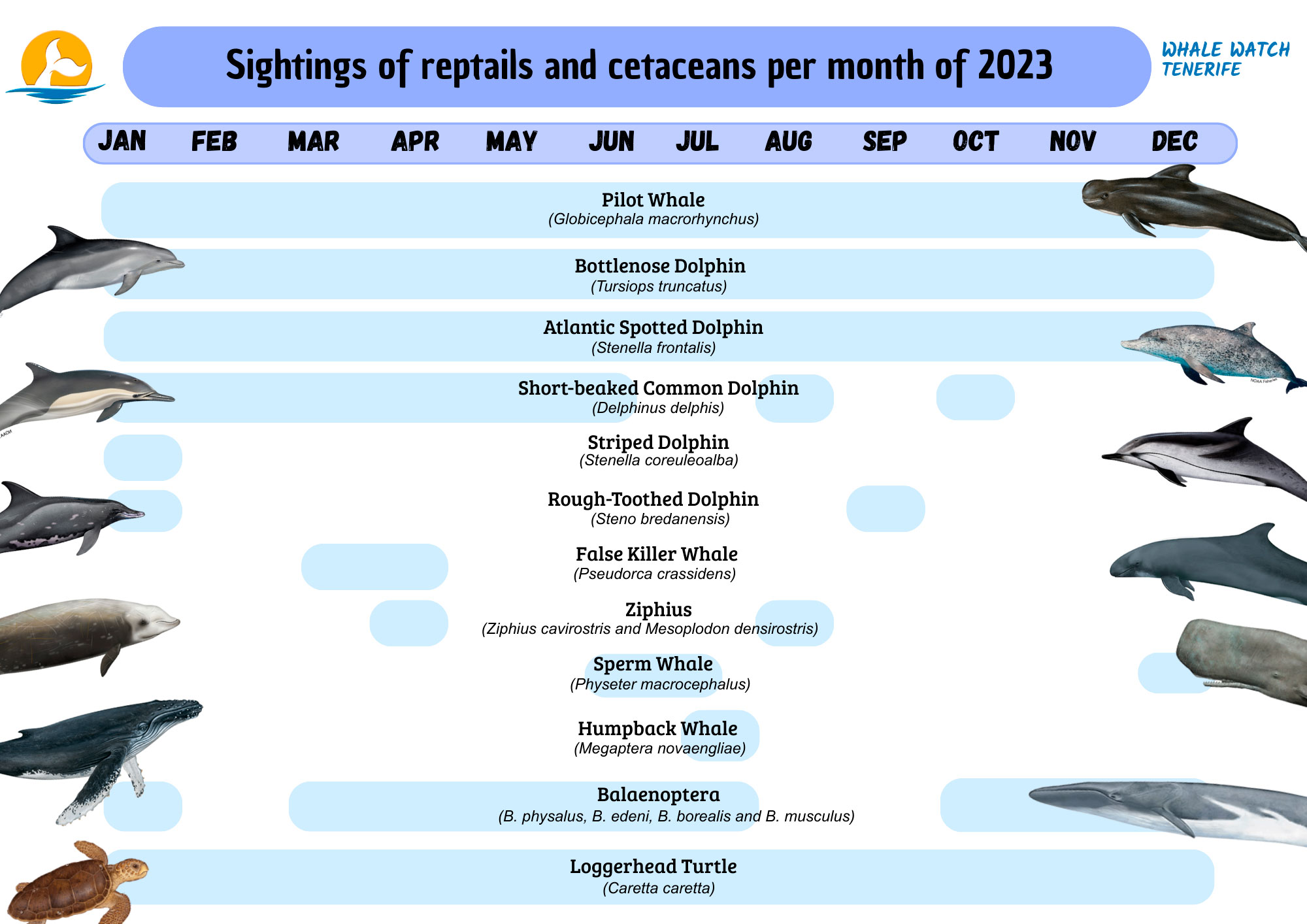
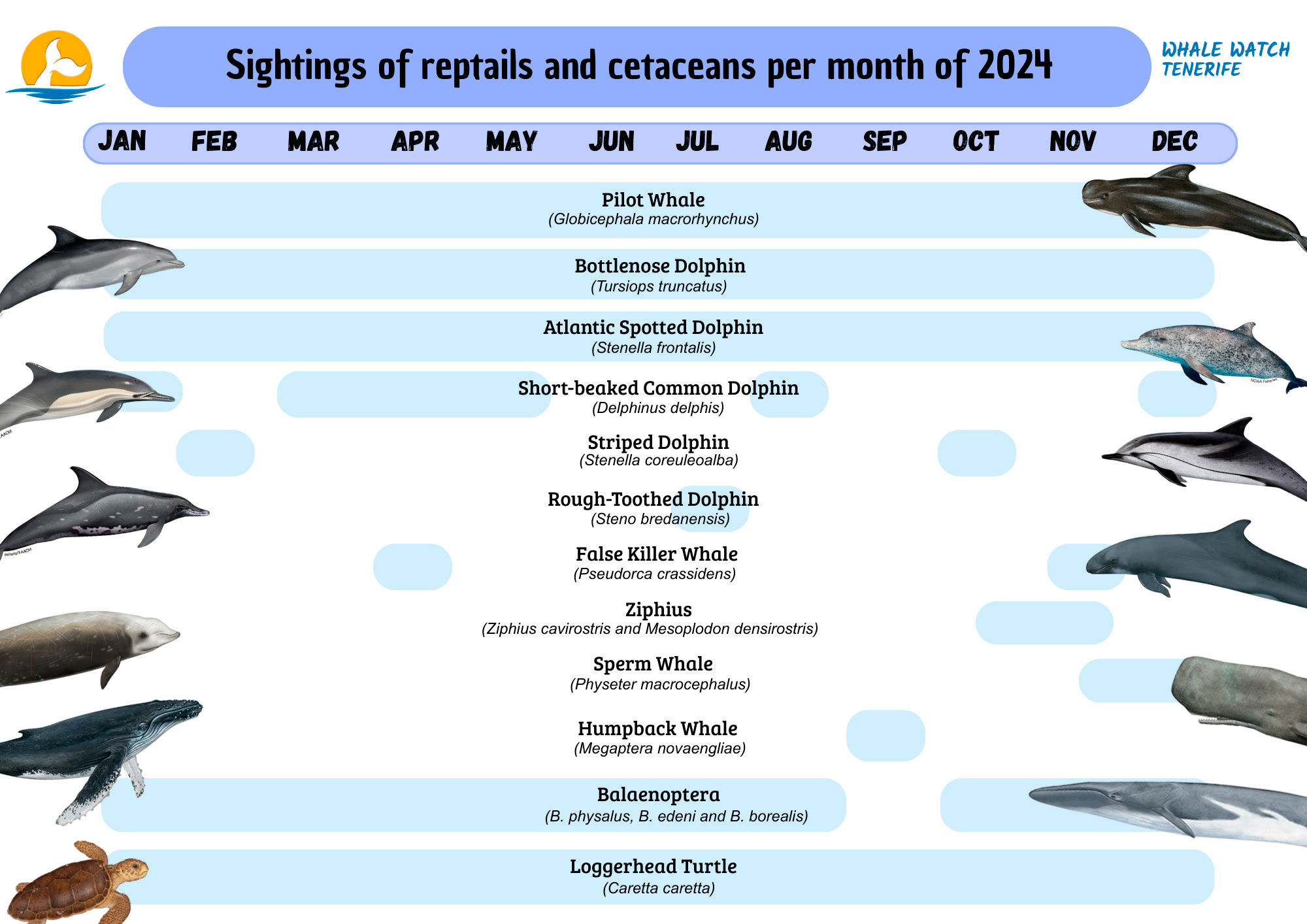
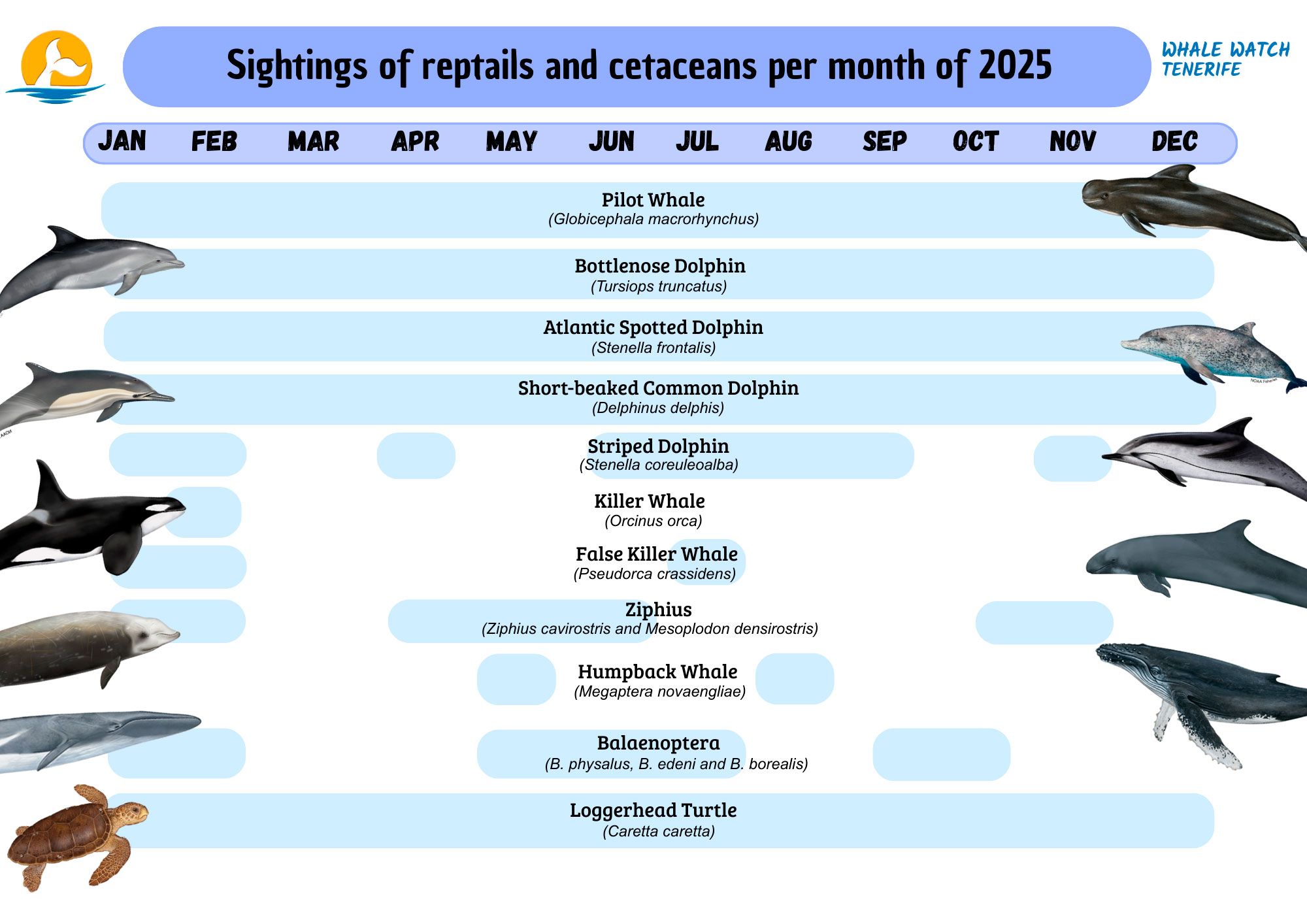
In the context of the Canary Islands, and especially Tenerife, orcas are of particular interest. They are not part of the island’s usual resident fauna, unlike short-finned pilot whales and bottlenose dolphins, but they occasionally appear in waters near the archipelago. Each sighting represents a unique scientific and educational opportunity to better understand the movements of these large marine predators.
Information about orca biology, distribution, and conservation helps to better interpret these exceptional encounters in Tenerife and highlights the importance of protecting the Canary Islands’ marine ecosystem. The general characteristics of the species, together with specialised studies on Atlantic cetaceans, help provide context for recent records observed in Tenerife’s waters.
What is an orca?
The orca is the largest toothed whale in the world. Adult males can exceed 8 metres in length and weigh more than 5 tonnes, while females are slightly smaller. Their black colouring with clearly defined white patches makes them unmistakable even from a great distance.
One of their most distinctive features is the dorsal fin. In males, it can reach nearly 1.8 metres in height, making it one of the most striking structures among marine mammals. In addition, they have a streamlined and muscular body that allows them to swim at speeds of over 50 km/h over short distances. The combination of power and agility makes orcas extremely efficient predators in virtually all of the world’s oceans.
Unlike large filter-feeding whales, orcas use echolocation to navigate, communicate, and locate prey. They produce clicks and whistles that travel underwater and return as echoes, allowing them to detect objects, fish, or marine mammals even in low-visibility conditions.
A Complex and Highly Intelligent Society
Orcas stand out not only for their size but also for their extraordinary intelligence. They live in stable family groups called pods, generally made up of an adult female, her offspring, and other close relatives. These associations can remain together for decades and represent some of the most complex social structures known among marine animals.
Each group has its own repertoire of vocalisations, comparable to cultural dialects. Calves learn these calls from their mothers, their ¨signature whistle¨, and from the rest of the group, transmitting knowledge between generations. This cultural transmission influences hunting techniques, migration routes, and social behaviour.
Cooperation is fundamental to their daily lives. Orcas coordinate their movements to surround schools of fish, separate vulnerable individuals, or share food. Studies collected over time and in different locations around the world show that different populations can specialise in specific prey, developing strategies adapted to their particular environment.
This capacity for social learning is especially relevant when interpreting sightings in Tenerife: a small group observed near the island is unlikely to be behaving randomly, but rather following cultural and ecological patterns specific to its population of origin.
Worldwide Distribution and Presence in the Atlantic
Orcas have one of the widest distributions of all mammals. They are found from polar regions to tropical and subtropical waters. However, their abundance varies considerably depending on food availability.
In the northeastern Atlantic, there are populations associated with Iceland, Norway, the British Isles, and the Iberian coast. Some feed mainly on herring and other pelagic fish, while others may prey on marine mammals.
The waters around the Canary Islands are located in an oceanic transition zone influenced by Atlantic currents, upwellings, and high productivity during certain periods of the year. Although these conditions favour the presence of numerous cetacean species, orcas are considered occasional visitors. Their appearance is usually related to movements in search of food or to the migration patterns of their prey.
Tenerife: A Cetacean Sanctuary
Tenerife is one of the best places in Europe for cetacean watching. Between Tenerife and La Gomera lies a marine area known for hosting resident populations of short-finned pilot whales (Globicephala macrorhynchus) and bottlenose dolphins (Tursiops truncatus).
The constant presence of these species has encouraged a nature tourism model based on responsible cetacean observation. Authorised companies operate under regulations designed to minimise the impact on animals, maintaining appropriate distances and limiting approach manoeuvres.
In this scenario, dominated by resident species, the appearance of orcas represents an extraordinary event for both researchers and experienced observers.
The Exceptional Orca Sighting in Tenerife
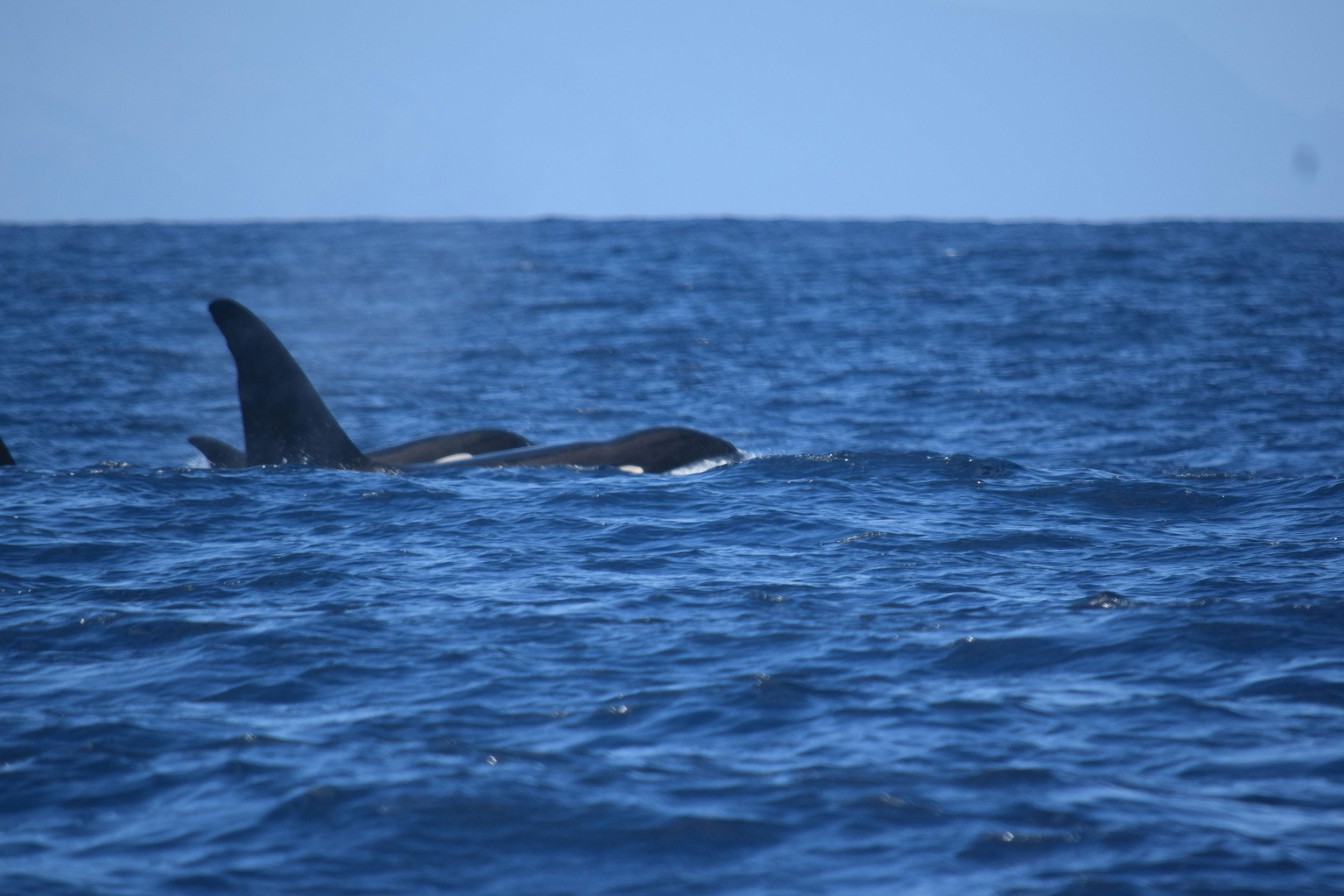
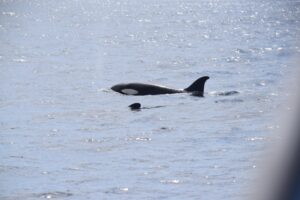
Our team at Whale Watch Tenerife recently had an exceptional encounter with a small group of orcas in waters near the island. The animals were observed during a cetacean-watching trip, displaying active behaviour and moving through the area for a limited period of time.
The sighting was particularly significant because orcas are not among the species regularly observed in the southwest of Tenerife. This type of encounter has great scientific value, as photographs and behavioural data are collected for possible identification and monitoring.
These types of observations contribute to the understanding of oceanic cetacean movements in the eastern Atlantic and demonstrate that Canary Island waters may occasionally be used by highly mobile species that are normally associated with other ocean regions.
Why Do Orcas Reach the Canary Islands?
There are several plausible hypotheses to explain the occasional presence of orcas in Tenerife:
Following Prey
Orcas usually travel to areas where they find concentrations of food. Large tuna, pelagic fish, or even other cetaceans may temporarily attract these predators to Canary Island waters.
Exploratory Movements
Some populations undertake wide-ranging movements that do not always follow strict seasonal migrations. Young individuals or certain groups may explore new feeding areas.
Oceanographic Changes
Variations in water temperature, currents, and marine productivity can modify the distribution of prey and, consequently, that of top predators.
The combination of these factors makes the Canary archipelago a potential passage point within broader oceanic routes.
Hunting Adaptations
Orcas are apex predators, meaning they occupy the top of the food chain and have virtually no natural predators. Their diet is extraordinarily diverse and includes:
- Pelagic fish.
- Sharks and rays.
- Cephalopods.
- Seals and sea lions.
- Dolphins and other whales.
- Moose and deer.
- Salmon.
The most interesting aspect is that different populations can specialise in specific types of prey. Some orcas are mainly adapted to feeding on salmon, while others hunt marine mammals using sophisticated cooperative tactics.
In Tenerife, there is no evidence of a specialised resident population, but a visiting group could be following temporary food resources present in ocean waters near the island.
The Ecological Role of Orcas
As apex predators, orcas play an essential role in maintaining the balance of marine ecosystems. By regulating prey populations, they indirectly influence multiple levels of the food web.
The presence of top predators is often considered an indicator of ecological health. Although orcas are rare in Tenerife, their occasional appearance suggests that Canary Island waters maintain functional connections with broader ocean ecosystems and preserve resources capable of temporarily supporting large marine predators.
Furthermore, studying them helps to understand large-scale ecological processes, such as the distribution of pelagic fish and the effects of climate variations on Atlantic food chains.
Threats to Orcas
Despite their image as powerful predators, orcas face numerous threats resulting from human activities.
Chemical Pollution
Persistent compounds, such as PCBs and other industrial pollutants, accumulate in cetacean fat and can affect their immune and reproductive systems.
Reduction of Prey
Overfishing of commercial species alters food chains and can reduce food availability for certain orca populations.
Underwater Noise
Maritime traffic, sonar systems, and other sources of noise interfere with echolocation and acoustic communication, which are essential for their survival.
Entanglements and Collisions
Fishing gear and heavy vessel traffic represent additional risks, especially in areas with high human activity.
NOAA Fisheries identifies these threats as key factors affecting several orca populations in different regions around the world.
Conservation in Tenerife and the Canary Islands
The protection of cetaceans in the Canary Islands is based on Spanish and European legislation that regulates observation activities and prohibits the disturbance of animals. Tenerife has developed an important culture of Responsible whale watching, where environmental education plays a central role.
When an exceptional orca sighting occurs, the priority must always be the welfare of the animals. This involves:
- Maintaining appropriate distances.
- Avoiding sudden changes in speed or direction.
- Reducing the interaction time.
- Recording the sighting for scientific purposes without interfering with their natural behaviour.
The experience accumulated by specialised operators in Tenerife demonstrates that it is possible to combine nature tourism, research, and conservation in a sustainable way.
The Scientific Value of Each Sighting
Each observation of orcas in Tenerife waters can provide valuable information about:
- Group size and composition.
- The presence of calves or juveniles.
- Feeding or movement behaviours.
- Movement patterns between archipelagos and Atlantic regions.
Photographs of the dorsal fin and eye patch allow for photo-identification, a technique used internationally to recognise specific individuals. If an individual photographed in Tenerife matches catalogues from other Atlantic regions, it would be possible to reconstruct part of its movements and better understand the ecological connections of the eastern Atlantic.
For this reason, occasional sightings have a relevance that goes far beyond the tourist excitement of the moment.
Orcas and Environmental Education
Orcas have enormous inspirational power. Their charisma makes it easier to communicate messages about marine conservation, ocean pollution, and the sustainable use of marine resources.
In Tenerife, where thousands of visitors take part in cetacean-watching excursions every year, an encounter with orcas can become an exceptional educational tool. Explaining that these animals are occasional visitors, highly intelligent, and dependent on healthy ocean ecosystems helps to encourage a more respectful relationship with the sea.
Information sharing based on rigorous scientific knowledge also helps to dispel myths associated with the term “killer whale”, highlighting that orcas are complex social animals whose natural behaviour deserves understanding and protection.
Conclusion
Orcas represent one of the most sophisticated expressions of marine life. Their intelligence, social organisation, and ability to adapt make them undeniable protagonists of the world’s oceans.
In Tenerife, where short-finned pilot whales and bottlenose dolphins are the most commonly observed cetaceans, the appearance of orcas is a truly exceptional event. The records documented by Whale Watch Tenerife demonstrate that Canary Island waters maintain ecological links with the great oceanic routes of the Atlantic and offer unique opportunities for scientific research and environmental education.
Understanding the biology and threats faced by orcas, as described by specialised scientific organisations, allows us to appreciate these occasional encounters even more. Each sighting reminds us that the Atlantic Ocean is an interconnected system where even the largest predators can unexpectedly appear off the coast of Tenerife.
Protecting the Canary Islands’ marine environment, promoting responsible cetacean observation, and supporting research into oceanic species are essential steps to ensure that future generations can continue to marvel at the possible and exciting sight of an orca crossing the blue waters of Tenerife.
Sources used
- NOAA Fisheries. Killer Whale (Orcinus orca). https://www.fisheries.noaa.gov/species/killer-whale
- Futurismo Azores Adventures. Orca / Killer Whale. https://www.futurismo.pt/species/orca-killer-whale/
- Whale Watch Tenerife. Exceptional Sighting: Orcas in Tenerife. https://whalewatchtenerife.org/exceptional-sighting-orcas-tenerife/