Booking

Sleeping is a necessity for almost all animals, but when it comes to marine mammals such as whales and dolphins, an interesting question arises: how can they sleep without stopping to breathe?
Unlike fish, cetaceans are mammals and must consciously come to the surface to breathe. This means they cannot fall into a deep, uninterrupted sleep for long periods as humans do. Evolution has provided them with an extraordinary solution: unihemispheric sleep.
What exactly is it? It is an adaptation that allows one half of the brain to remain awake while the other half rests. Later, the hemispheres switch roles.
Thanks to this system, whales and dolphins can continue breathing, remain alert to potential dangers, and maintain a certain level of orientation while resting.
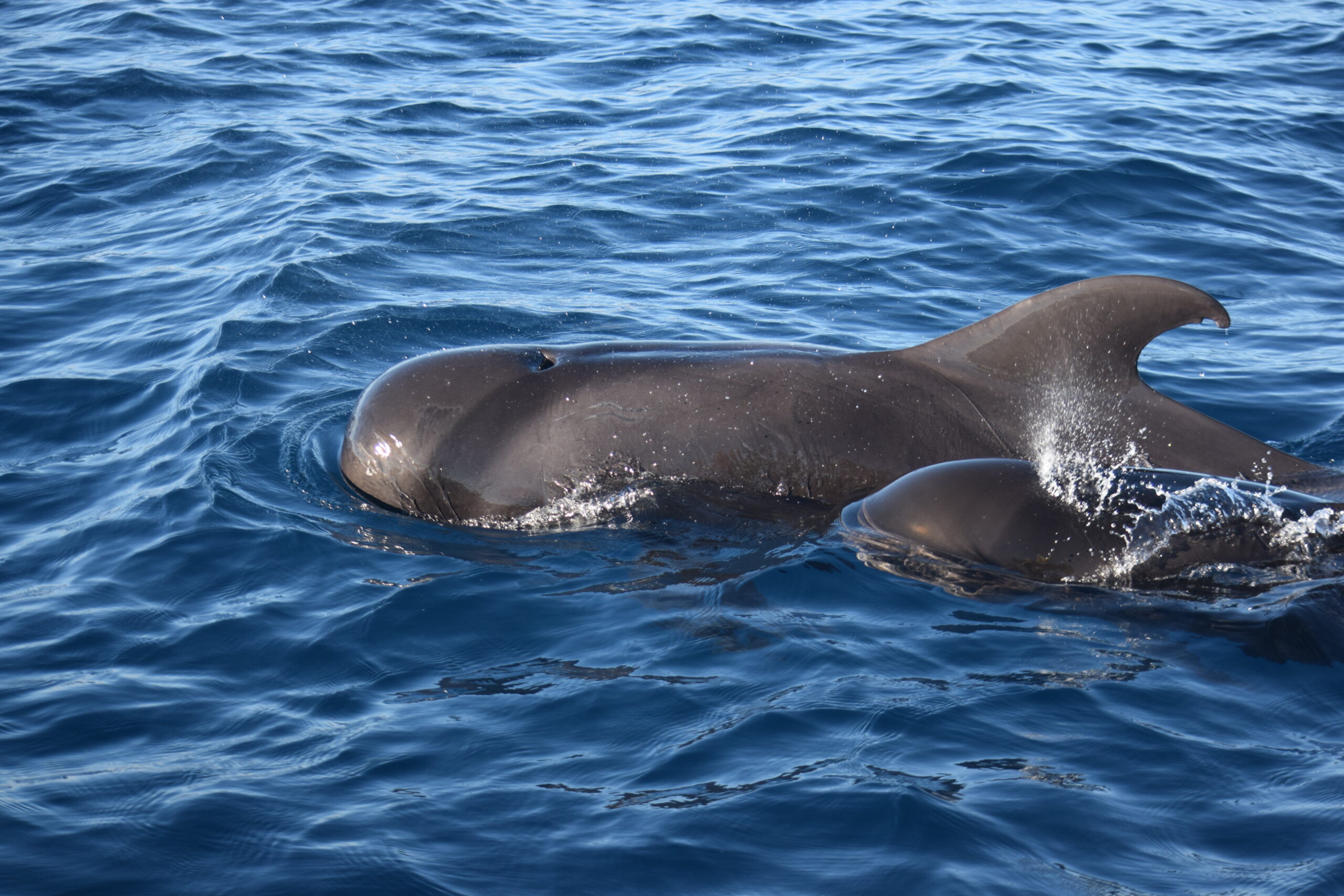
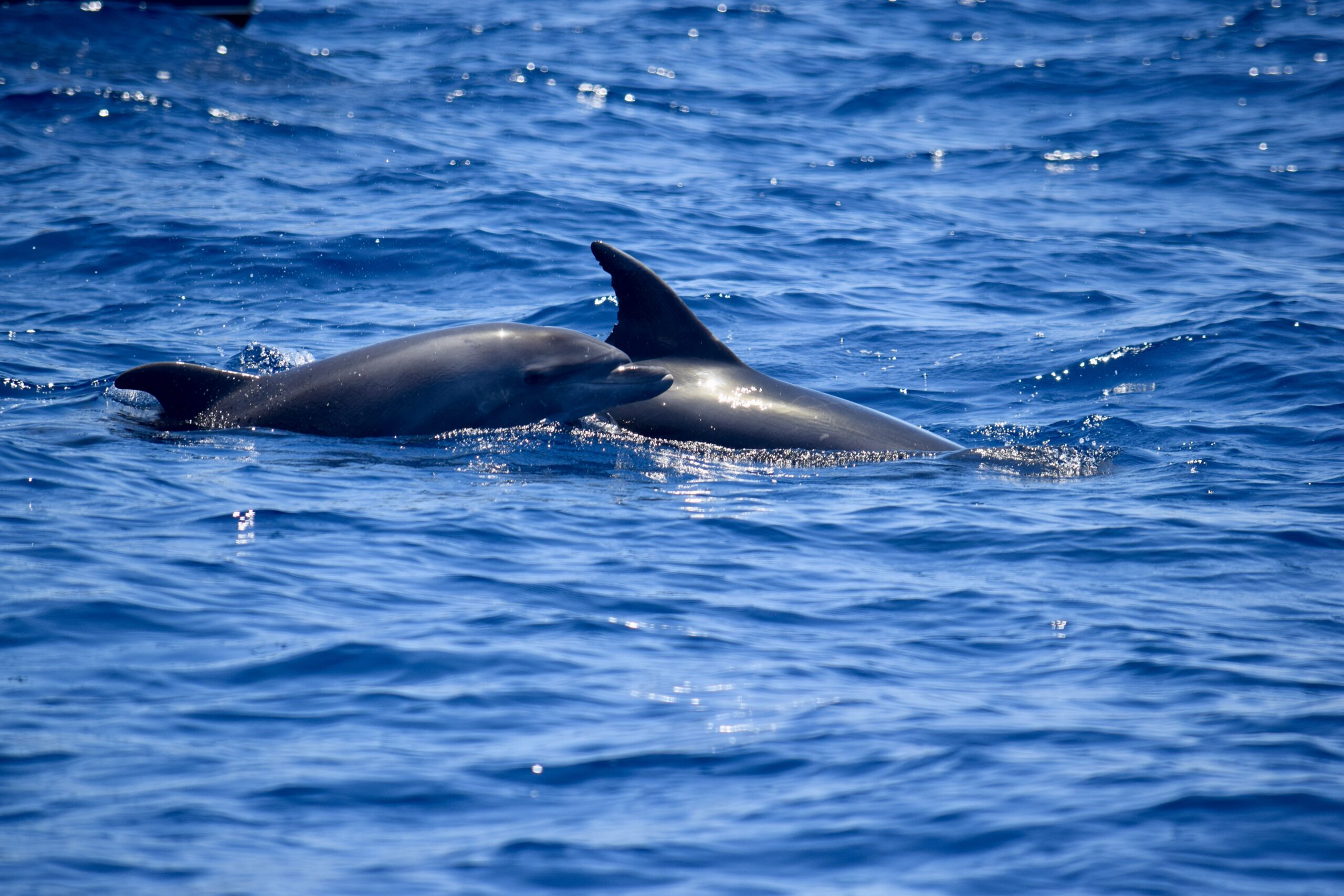
When observing dolphins in the wild, it is common to see them moving slowly near the surface or remaining in small groups while resting. Although they may appear fully awake, part of their brain is actually asleep.
Dolphins usually rest close to the surface to make breathing easier. During these periods, they significantly reduce their activity and may remain still or swim very slowly.
One fascinating detail is that they often keep one eye open and the other closed. The open eye is connected to the hemisphere of the brain that remains awake, allowing them to monitor their surroundings.
Family groups also play an important role. While some individuals rest, others remain more alert, increasing the safety of the entire pod.

Whales use a similar system. Depending on the species, they may rest near the surface or remain suspended in the water for certain periods.
Some large whale species have been observed resting almost motionless near the surface. Sperm whales, for example, can adopt a vertical position while resting in groups for short periods of time.
Although their behaviour varies between species, all cetaceans share the need to maintain control of their breathing even while resting.
Why is this adaptation so important? Because conscious breathing is one of the main reasons cetaceans evolved this type of sleep. If they entered a deep sleep similar to that of humans, they could fail to surface for air.
Remaining partially alert also helps them detect predators, stay close to their calves, and maintain social cohesion within the group.
The next time you observe whales or dolphins in the ocean, remember that even during their moments of rest they are performing a complex balancing act between sleeping, breathing, and staying safe. It is one of the many adaptations that make these animals some of the most fascinating mammals on Earth.
What about Tenerife’s pilot whales?
The pilot whales commonly observed in the waters of southern Tenerife also rely on unihemispheric sleep to rest without stopping to breathe. As marine mammals, they depend on this adaptation for survival in the open ocean.
These cetaceans live in highly social family groups known as pods, where rest and protection are closely connected. While some individuals are resting, others remain more aware of their surroundings, helping to maintain the safety and cohesion of the group.
These cetaceans live in close-knit family groups known as pods, where rest and protection are closely linked. While some individuals rest, others remain more alert to their surroundings, helping to maintain the group’s cohesion and safety.
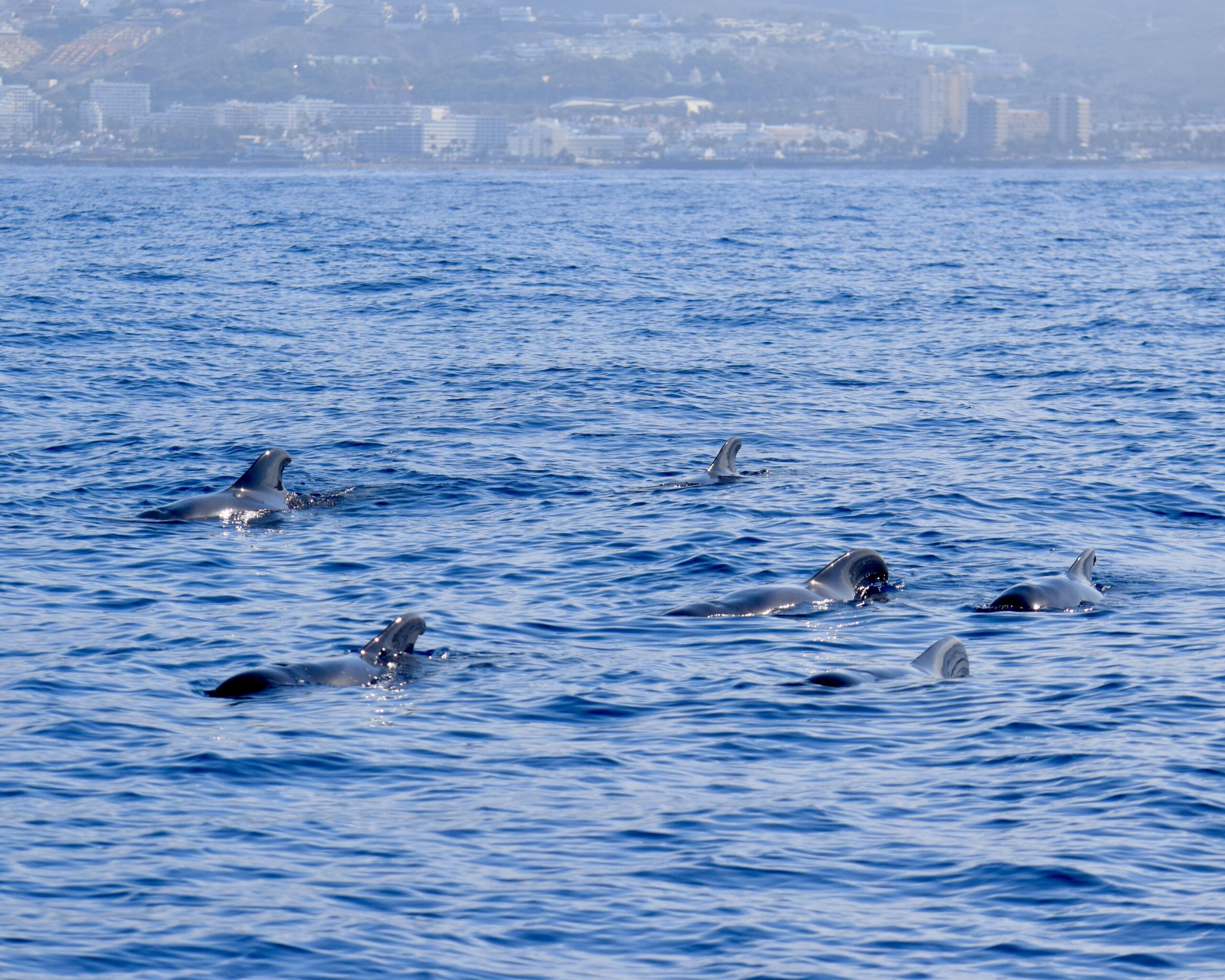
They can often be seen lined up side by side, forming what looks like a “chorus line.” In this position, they rest while still maintaining contact with their companions. Thanks to their eyes being located on the sides of their heads, they can continuously monitor one another and stay aware of any movement within the group.
Their complex social lives, constant communication, and need to perform deep dives in search of food make these periods of rest especially important.
Thanks to unihemispheric sleep, pilot whales can alternate between resting and remaining vigilant without ever losing control of their breathing or awareness of their environment.
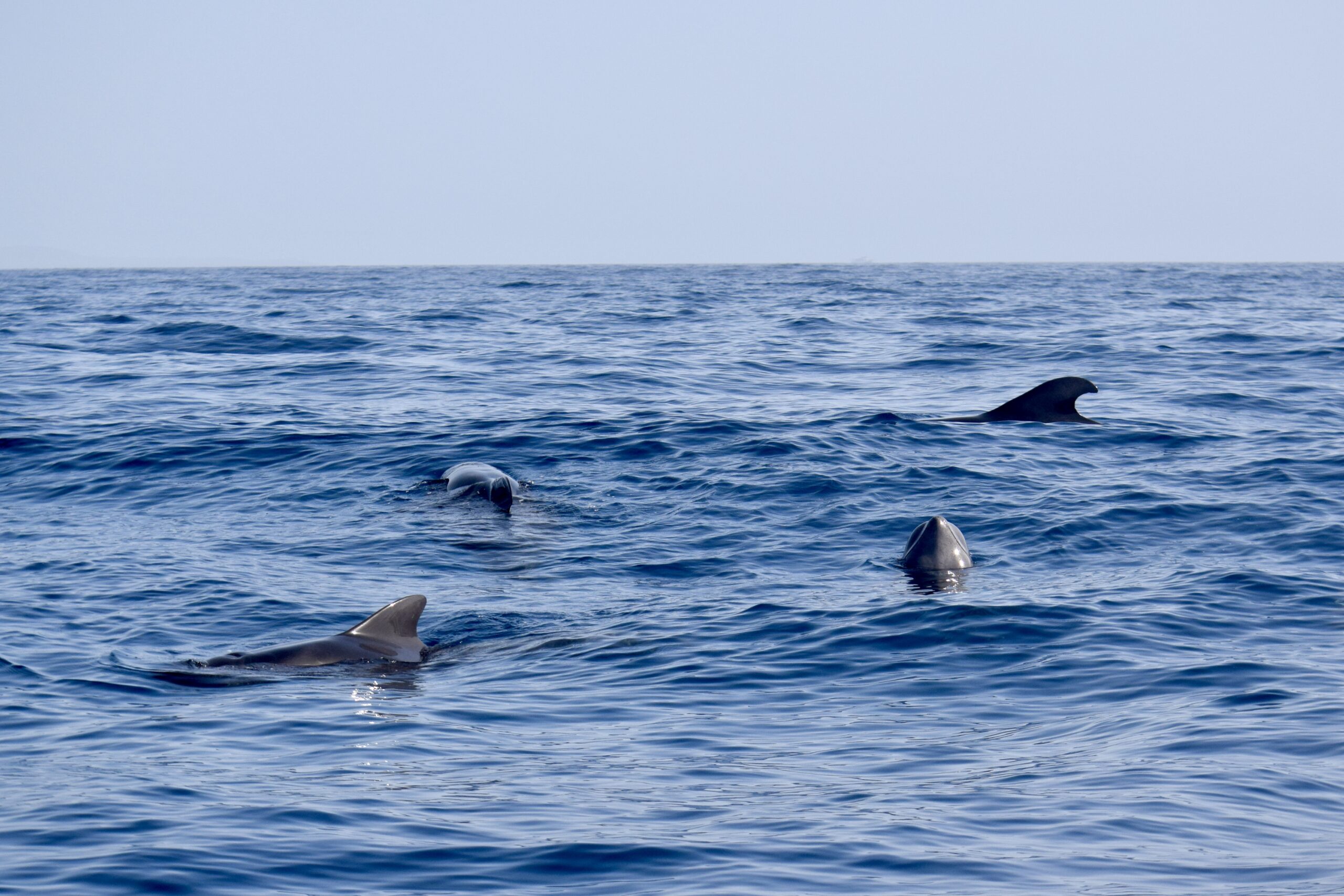
In the protected waters between Tenerife and La Gomera, home to one of the world’s most important resident populations of short-finned pilot whales, this remarkable adaptation is part of their daily lives and one of the many reasons these animals continue to fascinate scientists and visitors alike.
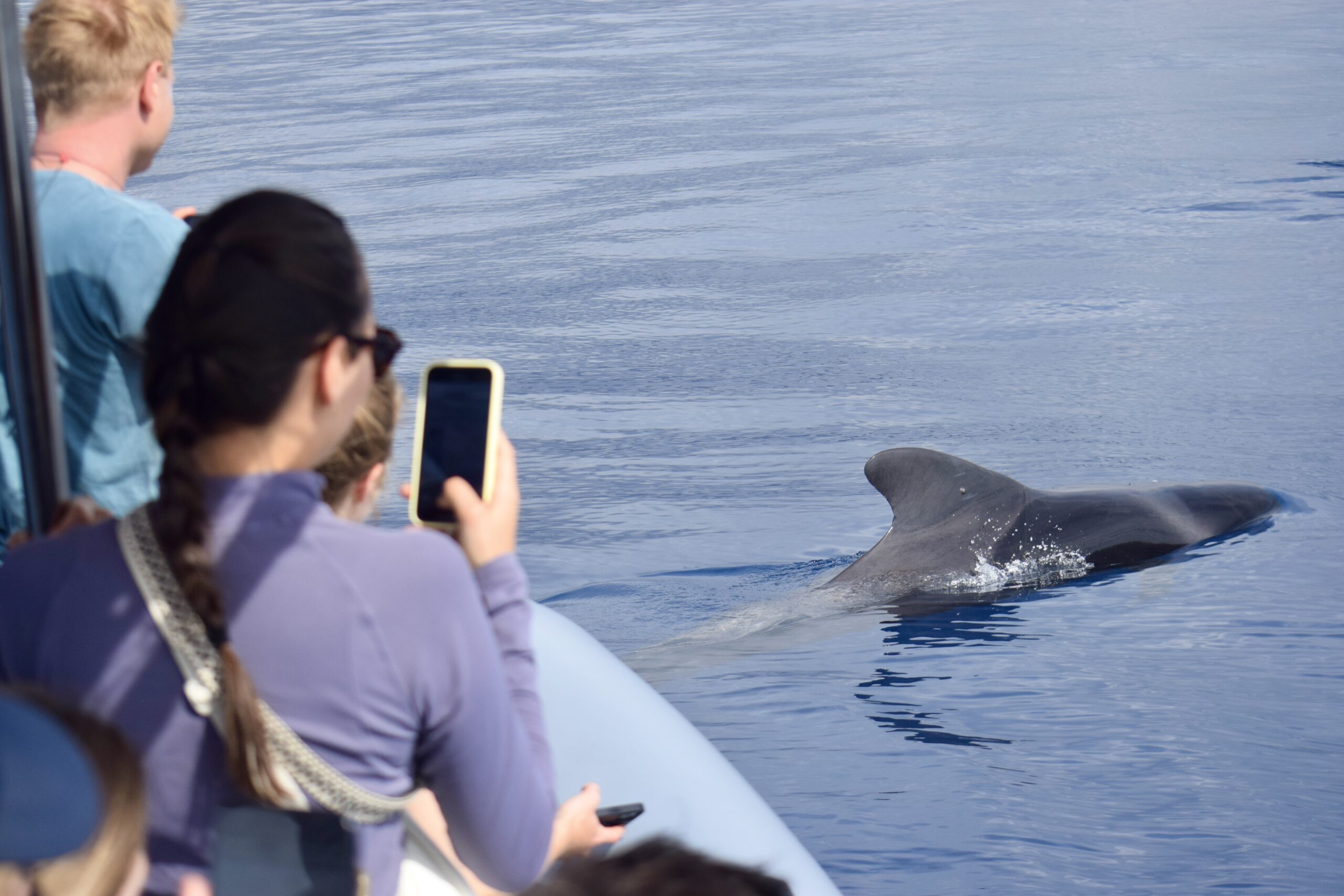
If you would like to observe short-finned pilot whales up close and learn more about how they live, communicate, and rest in the wild, we invite you to join one of our responsible whale-watching excursions in Tenerife.
Every trip is an opportunity to discover more about these fascinating cetaceans in their natural habitat and to understand why the waters between Tenerife and La Gomera are among the best places in Europe to observe them.
We look forward to welcoming you on board for a unique experience in the ocean.
Bookings: whalewatchtenerife.org
Daily departures at 9:30 am, 12:00 pm and 2:30 pm