Booking



Whale and dolphin watching in Tenerife
When we think of Tenerife, the first things that usually come to mind are Mount Teide, the beaches or the volcanic landscapes. But there is another landscape, far less visible, that begins just off the coast. Whale and dolphin watching in Tenerife is the way to get a glimpse of it: just a few kilometres from the shore, off the southwest of the island, whales and dolphins live all year round. In this guide we tell you which species you can see, the best time of year, what our trips from Puerto Colón are like and what it means to watch them responsibly.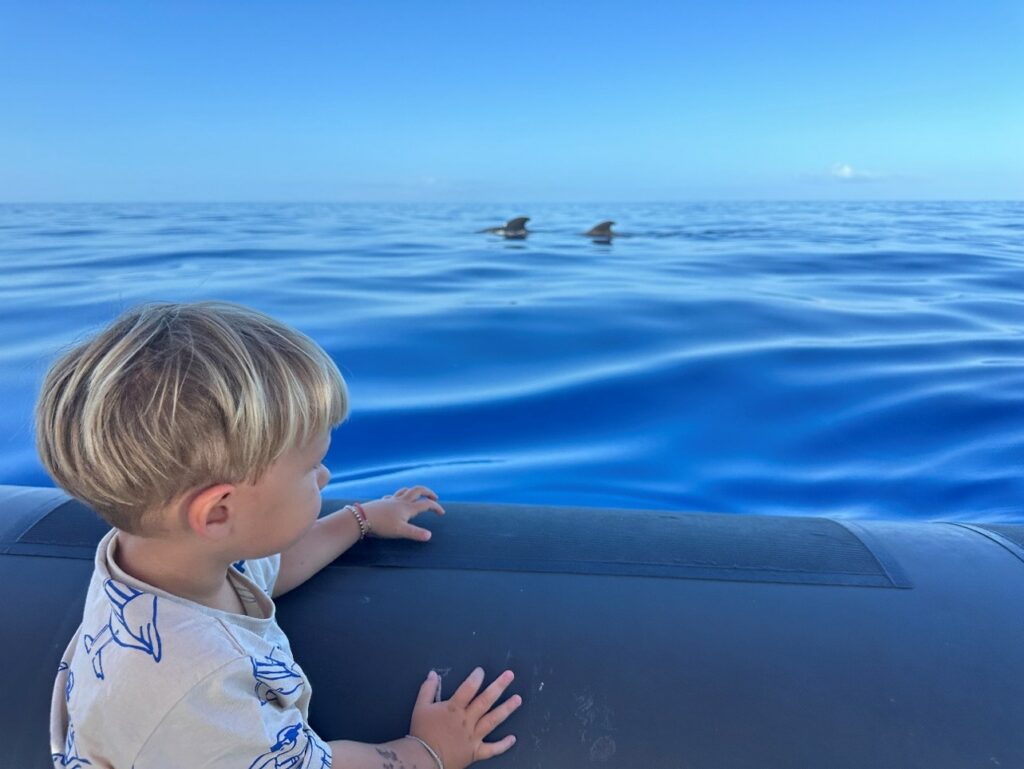
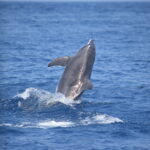
Short-finned pilot whale in the waters of Tenerife
Why Tenerife is one of the best places to see whales and dolphins
Very close to the coast of Costa Adeje, the seabed drops to great depths. This steep underwater landscape, together with the oceanographic conditions of the Canary Islands, creates an ideal habitat for cetaceans. The result is one of the most stable resident populations in Europe and a sighting rate of up to 99.9% all year round. That is why, when we head out from Puerto Colón towards the Teno-Rasca area, we never know exactly what awaits us. And that, precisely, is part of the magic.Which whales and dolphins can you see in Tenerife
These waters are home to resident species, which live here all year round, and occasional species, which pass through during their migrations. The ones we see most often are:- Short-finned pilot whale: the star species of the area and one of the largest resident populations in the world. It is almost always the highlight of our trips.
- Bottlenose dolphin: curious and sociable, it often approaches the boat and swims alongside us in the waves.
- Atlantic spotted dolphin: very active and playful, especially in the warmer months.
Pod of dolphins next to the boat in Costa Adeje
The best time for whale and dolphin watching in Tenerife
One of Tenerife’s great advantages is that whale watching works all year round: pilot whales and bottlenose dolphins are residents and can be seen 365 days a year. Even so, there are some differences depending on the season:- Spring and summer: calmer seas and more dolphin activity; a good time for comfortable sightings and for spotting calves.
- Autumn and winter: in addition to the resident species, the chances of encountering migratory species passing through increase.
What our trips from Puerto Colón are like
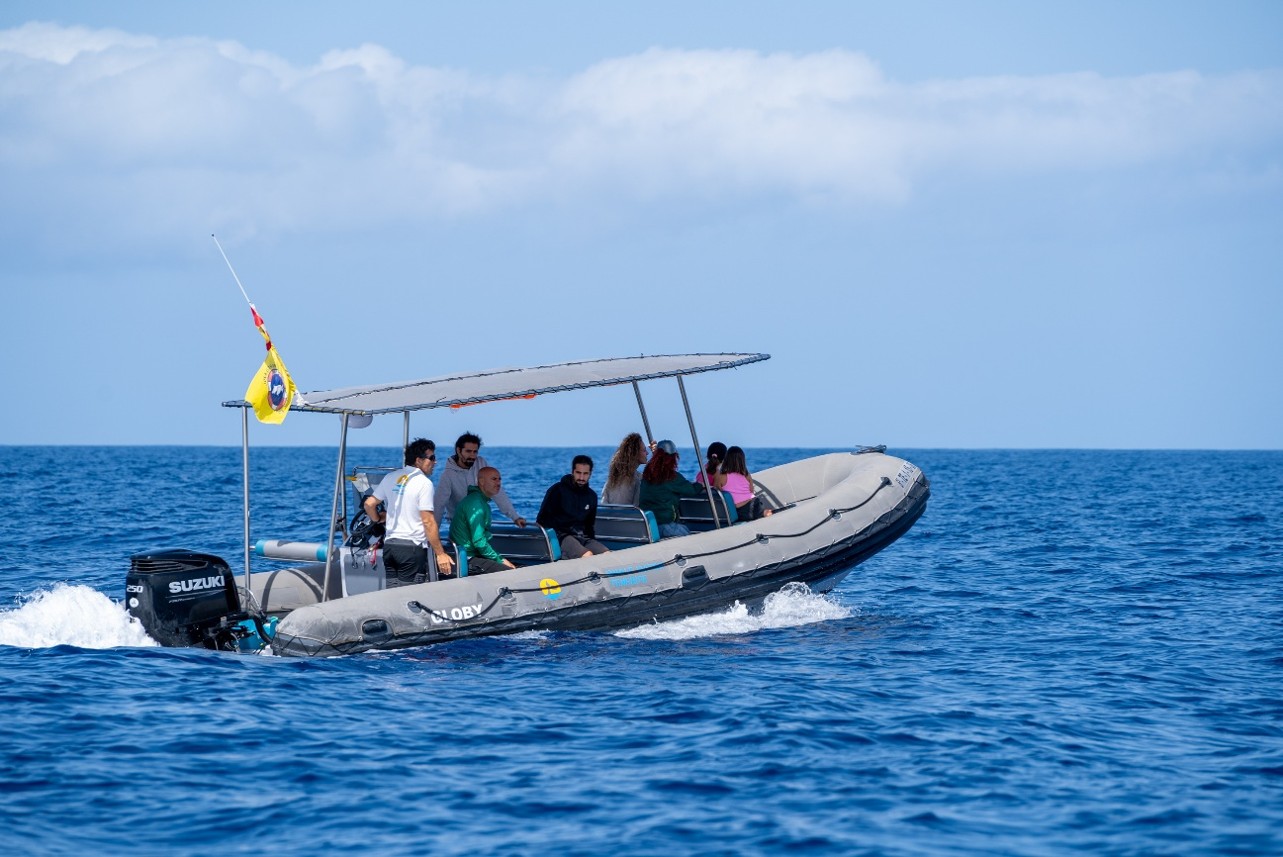
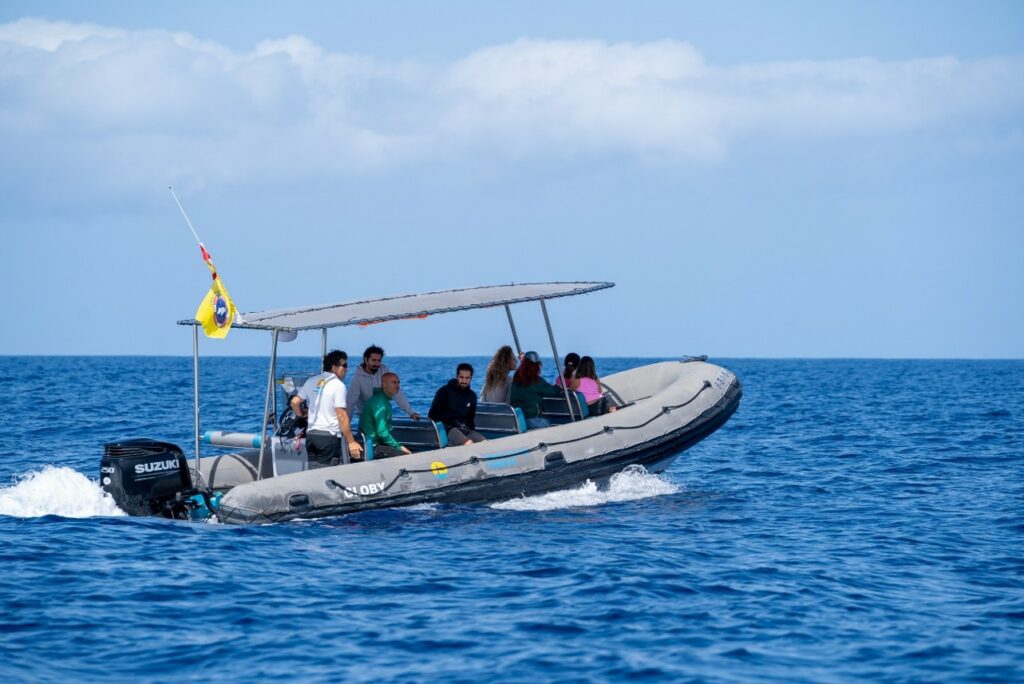
Our tours depart from the marina at Puerto Colón, in Costa Adeje, and sail towards the protected Teno-Rasca area. This is what you’ll find on board:- Small groups, with a maximum of 10 people, for a close and respectful experience.
- Marine biologists on board (in Spanish and English) who explain what you are seeing.
- A hydrophone to listen to the cetaceans underwater.
- Free tour photos so you can enjoy the moment without worrying about your camera.
- An approximate duration of 2 hours, with daily departures.
Observing is much more than recognising a species
Once the animals have been located, the real work of observation begins. How many individuals are there? Are they adults or juveniles? Are they travelling, resting or feeding? Are they staying together or spread out? Over time you discover that the sea is full of small clues: a blow at a specific spot, several fins surfacing at once, a sudden change in the group’s direction or the presence of certain birds.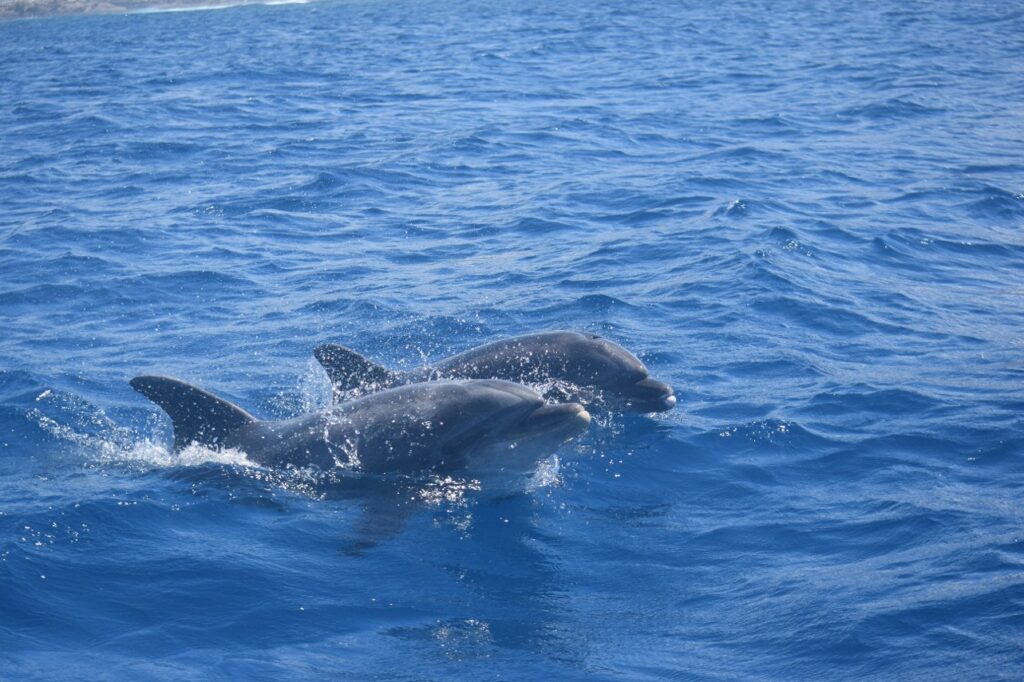
Respectful cetacean watching from the boat
What responsible whale watching means
Cetaceans are not there to entertain us: they are wild animals that use these waters to live, feed, rest and breed. That is why responsible whale watching is not about getting them as close as possible, but about being able to observe them without altering their behaviour. Keeping an appropriate distance, navigating predictably and avoiding chasing or sudden changes of course are small actions that make a big difference. As a Blue Flag certified company and a member of the World Cetacean Alliance, we work to be visitors to this ecosystem, not the main characters.What to expect on board (and how to book)
Every day we head out to the same ocean, but we never see exactly the same thing. Sometimes we return after finding a large pod of pilot whales; other times, after a brief encounter with dolphins; and some days the sea reminds us that it also knows how to keep its secrets. The real show is not the animals doing something for us: it is having the chance to observe, for a few minutes, a small part of the life that was already happening there. If you’d like to experience it, you can book your whale watching tour in Tenerife and choose between our group trip or the private tour. We look forward to seeing you in Puerto Colón.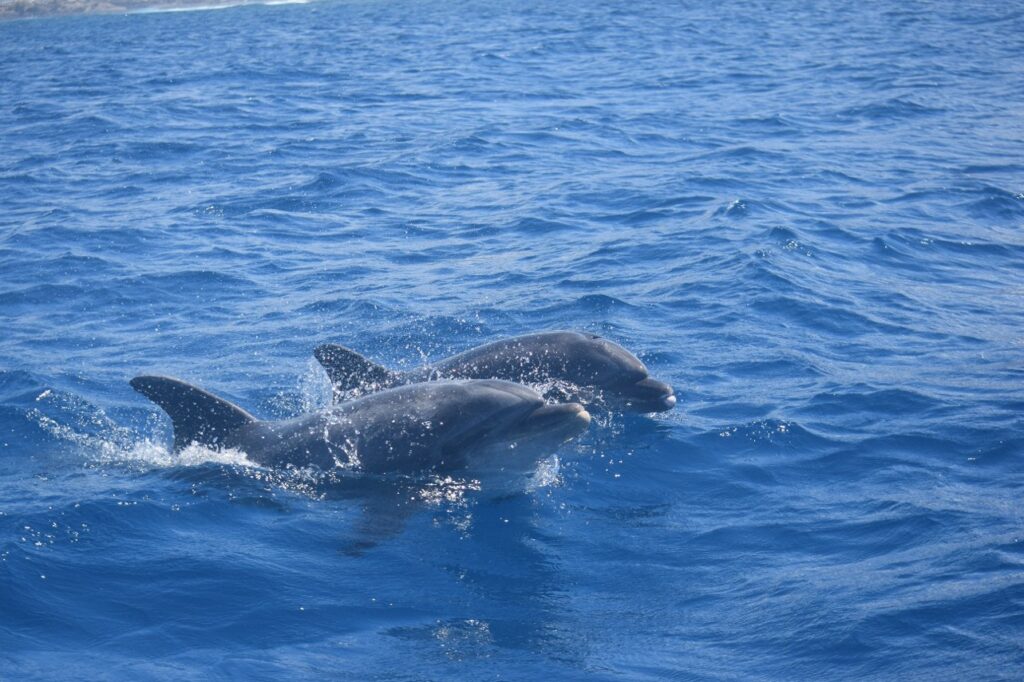
Encounter with cetaceans off the coast of Tenerife